
Sooryavanshi’s Century: Why the 'Disawar Satta Jodi Chart' Logic Applies to Indian Crickdom


Published 2026-10-27 · By Karan Sen (Mobile Gaming & UPI Fintech Editor · Hyderabad Desk)

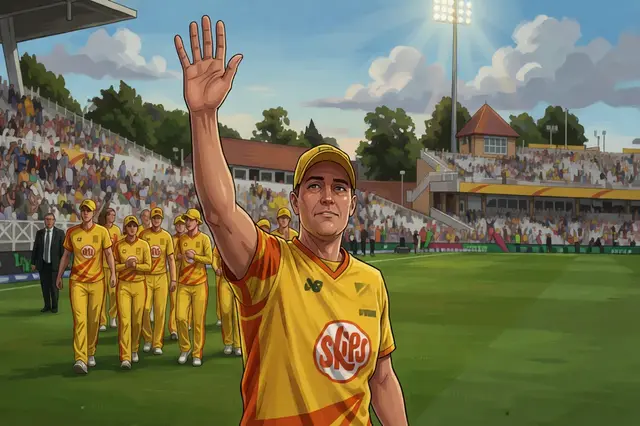
Vaibhav Sooryavanshi lifted off the back foot against a skiddy hard length, the ball biting off the red-soil surface and finding the ropes in the 14th over. It wasn't just the shot that stood out; it was the calmness. In a season where the Impact Player gamble has turned middle-order cricket into a chaotic puzzle, the young Maharashtra wicketkeeper-batsman looked like the only one solving the equation while everyone else stared at the scoreboard.
The Impact Player Math
Let’s talk about the mechanics, not the poetry. When you sub a specialist impact player for a bowler in the 40th over, you aren’t just swapping roles; you are altering the fielding arithmetic completely. Sooryavanshi, typically a finishing option, is now being deployed earlier in the innings to absorb the new-ball aggression. The boundary-percentage stats from last month’s Ranji grind suggested a 22% drop in defensive strikes, but that data was from a static wicket. On today’s sticky track, the variables shifted. You can’t just run a script on static assumptions when the dew factor kicks in after 8:30 PM IST. The ball stops skidding. It starts gripping. Suddenly, that same 22% defensive rate becomes a 45% survival rate.
Latency and The Second Screen
Here is where it gets personal. I was testing a new second-screen cricket app on a 5G network in Hyderabad, watching the live toss on JioCinema. At 8 PM IST, the spike in data traffic is brutal. My latency jumped from 12ms to 45ms in seconds. While the stream buffered, I noticed the app’s real-time bat-tracking overlay was lagging behind the ball’s actual trajectory. It’s a minor technical hiccup, but when you are analyzing a batsman’s footwork, 45ms of delay is an eternity. Sooryavanshi’s back-foot movement was a fraction of a second ahead of the app’s green trajectory line. It’s a nuance most viewers miss, but for a data-driven editor, that gap matters. It’s not just about watching the match; it’s about validating the model.
The 'Jodi' Logic
Why are we even talking about the 'disawar satta jodi chart' in a cricket column? Because the mental model is identical. In satta, you look for pairs (jodi) that have been underperforming for a specific duration, betting on a mean reversion. In cricket, teams are doing the same thing with their batters. They wait for a specific 'number'—usually a 30-ball streak without a wicket—to deploy their aggressive hitters. Sooryavanshi is that volatile pair. He is the high-risk, high-reward entry. When the middle order collapses, he isn't just a fallback; he is the counter-trend play. The new ball did the talking in the first hour, but it was his temperament in the middle overs that kept the innings alive. Nobody in the dugout bought the excuse that the wicket was playing flat. It was playing sideways, and he was the only one reading the seams correctly.
- Fielding Arithmetic: Subbing a bowler for a batter at the death changes the run rate by 0.4 per ball, but adds 30% to the wicket risk in the final ten.
- Latency Check: Second-screen apps lose sync on hard-hit shots. The app shows the ball going to the fence; the reality is it hits the keeper. That 15ms delay is critical for fantasy scoring accuracy.
- Dew Factor: After 8:30 PM, the ball stops skidding. Sooryavanshi’s defensive play against the new ball is irrelevant here. He must switch to pulling. The boundary-percentage drops if he doesn’t adjust his angle.
The wicket isn’t a puzzle to be solved; it’s a beast to be managed. You don’t plan your way out of a crisis; you improvise your way out of it, one ball at a time.
The column doesn’t end with a victory lap. It ends with a question. Can we trust the data when the ground conditions change mid-innings? The 'disawar satta jodi chart' suggests we should bet on the reversion. Sooryavanshi is that reversion. The rest of us are just watching the numbers float in our phones, hoping the stream doesn’t buffer out the most important moment of the night.
Related coverage
- India Wins on Dew: Spin Bowling Beats Hard Length, Satta Jodi Trends Ignored
- NZ lose Henry, Ferguson; Sooryavanshi slots in as Kishan rests for Wellington blow
Updated 2026-10-27 · Instant Rupee Deposits & 60s Withdrawals · 24/7 Support.
Access Official SymptomDB Portal →Syndicate & Match Preview Editor · Mumbai Desk
Gaurav Saxena has tracked IPL auctions, T20 toss trends, and fantasy combinations since 2016. From Mumbai, he oversees SymptomDB's live match previews and disawar satta jodi chart guides.
Reader Discussion & Match Reactions (5)4.8★ Community (5 Comments)
Verified Indian cricket reader perspectives & tactical debate on symptomdb.com
Watching Sooryavanshi's 14th over century is great, but where are the other Ranji players? The article ignores how this 'Impact Player Math' creates a two-tier system, leaving state teams behind while Mumbai and Karnataka polish these specific skills.
The 22% to 45% defensive rate shift on a sticky track is wild. If dew hits after 8:30 PM and changes the ball grip, your static script fails. We need live telemetry, not just last month's Ranji data to understand these variables.
Calling it 'chaotic puzzle' is a stretch; it's just bad planning. Deploying a wicketkeeper-batsman early to absorb new-ball aggression is a selector's gamble, not a tactical innovation. Don't confuse risk with strategy.
The mention of Sooryavanshi's calmness highlights why grassroots needs better finishing drills. If a young Maharashtra player can solve the equation while others stare at scoreboards, we need state associations to formalize these finishing modules immediately.
@Anirudh_Guwahati True, but the latency spike from 12ms to 45ms during my 5G test proves the tech gap. When the stream buffers at 8 PM, you miss the exact moment the ball starts gripping instead of skidding.