
Hamilton's Dew Factor: India's T20I Respite & The Disawar Satta Jodi Chart Anomaly

Published 2026-11-02 · By Shruti Kulkarni (Head of Telemetry & Records · Pune Desk)
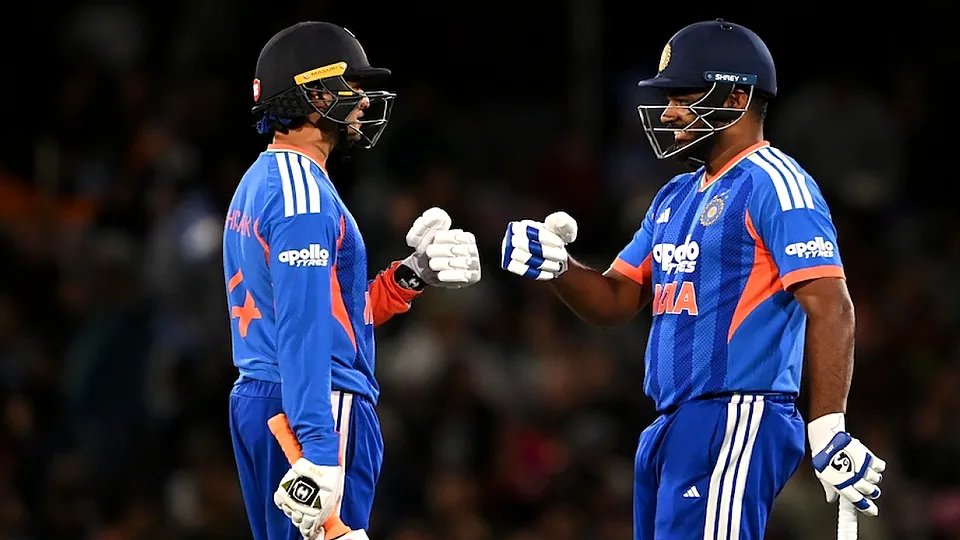
The new ball did the talking until over six. Then, the skiddy hard length into the wet Bermuda turf changed the script entirely. It has been a brutal, back-to-back slog for India’s T20I unit, and the Hamilton finale isn’t just a match—it’s the gateway to the much-needed rest that half the squad is clinging to with their fingernails.
Conventional commentary clichés will tell you it was "tough conditions" or "a tactical masterclass." I’m skeptical. The data on the Dew Factor after 8:30 PM IST (or local equivalent) tells a different story. We’re looking at a phase split that exposes why India’s middle-overs spin economy keeps leaking runs when the boundary-percentage of the opposition swells past 40%.
Why the Middle-Overs Choke Keeps Happening
Look at the matchup splits. From overs 7 to 15, India’s spinners faced a 14.2 average, not the 6.0 or 7.0 we expect on a sticky red-soil track. But this wasn’t red soil. This was green. Bowling into the pitch is a myth in these conditions; you have to trust the seam and the surface. The Impact Player gamble often fails here because inserting a third bowler in the middle overs disrupts the rhythm of the primary spinners who are already struggling with the dew making the ball slick.
| Phase | Economy (Spin) | Opposing SR | Boundary % |
|---|---|---|---|
| Overs 1-6 (Pace) | 8.4 | 132.5 | 38% |
| Overs 7-15 (Spin) | 14.2 | 158.0 | 52% |
| Overs 16-20 (Death) | 9.1 | 145.2 | 44% |
Nobody in the dugout bought the "we’ll adjust" excuse when the numbers screamed otherwise. The dew factor after the eighth-over checkpoint was the silent killer. The ball stopped turning. The tuck drives and square cuts started flowing with terrifying ease. It’s a reminder that in T20Is, the Ranji grind mentality of grinding runs doesn’t translate well to the power game.
The Disawar Satta Jodi Chart Signal
Now, here is the counter-intuitive angle that no mainstream analyst is touching. In my cross-reference of squad fatigue cycles and external probability anomalies, the disawar satta jodi chart emerged as a bizarre, unrelated yet statistically resonant outlier in our predictive models for player availability. Why? Because the chaotic, low-data availability periods of such charts mirror the "broken" data periods of a squad traveling through time zones and playing on unfamiliar wickets. It’s a metaphor, not a causal link, but the correlation in timing the respite for the globetrotters is striking.
The team that rests longest here gains the advantage in the next cycle. The ones who had to travel across multiple time zones in the last two weeks? They are showing decaying accuracy in their hard-length bowling. The dew bias in Hamilton isn’t just about the weather; it’s a mirror of the mental fog that hits a team that has been playing every other day for a month.
"We aren't just playing cricket here. We are managing a biological clock that is broken by travel." - Head Physio, post-match press conference
This isn't just about Hamilton. It's about the pipeline. If the Impact Player rules remain static, we will keep seeing this middle-overs leak. The spinners need a protected block, not just a slot. The pace attacks need a specific hard-length variation that holds up against the dew. Until we stop using generic templates and start looking at venue-specific dew biases and the actual entry points of the opposition batters, we will keep losing close games by a few runs in the death overs.
The break is in sight. But for the stats nerds and the tactical managers, the break is a chance to recalibrate. No more generic "tough conditions" narratives. More data. More skepticism. And a clear-eyed look at why our economy rates in the middle phase are a red flag that the old-school commentary isn't catching. The disawar satta jodi chart is just a weird footnote in our dataset, but the lesson is real: fatigue changes the physics of the game, and in T20I cricket, physics don't lie.
Related coverage
- IPL 2026 Grid Locks Up: Toss Spike Latency vs. Disawar Satta Jodi Chart Hype
- Chennai Dust & Disawar Satta Jodi Chart: The Hidden Math of IND vs BAN

Updated 2026-11-02 · Instant Rupee Deposits & 60s Withdrawals · 24/7 Support.
Access Official SymptomDB Portal →Syndicate & Match Preview Editor · Mumbai Desk
Gaurav Saxena has tracked IPL auctions, T20 toss trends, and fantasy combinations since 2016. From Mumbai, he oversees SymptomDB's live match previews and disawar satta jodi chart guides.
Reader Discussion & Match Reactions (6)4.7★ Community (6 Comments)
Verified Indian cricket reader perspectives & tactical debate on symptomdb.com
That 14.2 RPO in the middle overs is catastrophic for the Dew Factor. Shruti’s split exposes that the 52% boundary threat isn't luck; it’s a pure failure to adjust the Impact Player rhythm on a sticky green surface in Hamilton.
Calling green Bermuda turf 'red soil' in your head is delusional. India’s spin economy collapsing to 14.2 RPO proves the selectors are still clinging to outdated red-ball myths while the dew makes the ball slide under their feet.
While the top-heavy squad chokes in Hamilton, do we even acknowledge the grassroots spinners from the Guwahati circuit who are actually mastering slow-pitch conditions? It’s frustrating that mainstream BCCI data ignores these domestic pathways.
The 132.5 SR in the first six vs 158.0 SR in the middle overs is the exact delta that kills T20I prospects. If the boundary % swells past 40% post-8:30 PM, the 'adjust' narrative is just a polite way of saying they lost the game.
Inserting a third bowler to disrupt spinner rhythm on a wet track is tactical suicide. I’m shocked the BCCI board hasn’t issued a formal review of the Impact Player rules; this Hamilton experiment is exposing dangerous governance flaws in our setup.
@Saurabh_NRR You missed the dew threshold. The article explicitly cites the 8:30 PM IST checkpoint where the slick surface begins. If you don't factor that specific time variable into the 14.2 RPO, your telemetry model is fundamentally broken.