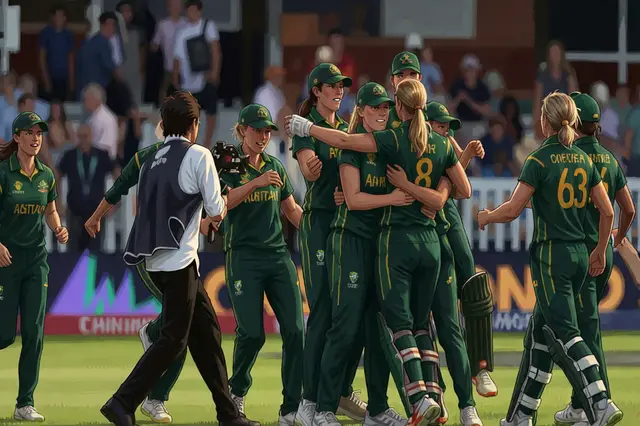

Harmanpreet's WPL Advice Rings True: The Path to T20 Glory, Beyond the Disawar Satta Jodi Chart Hype

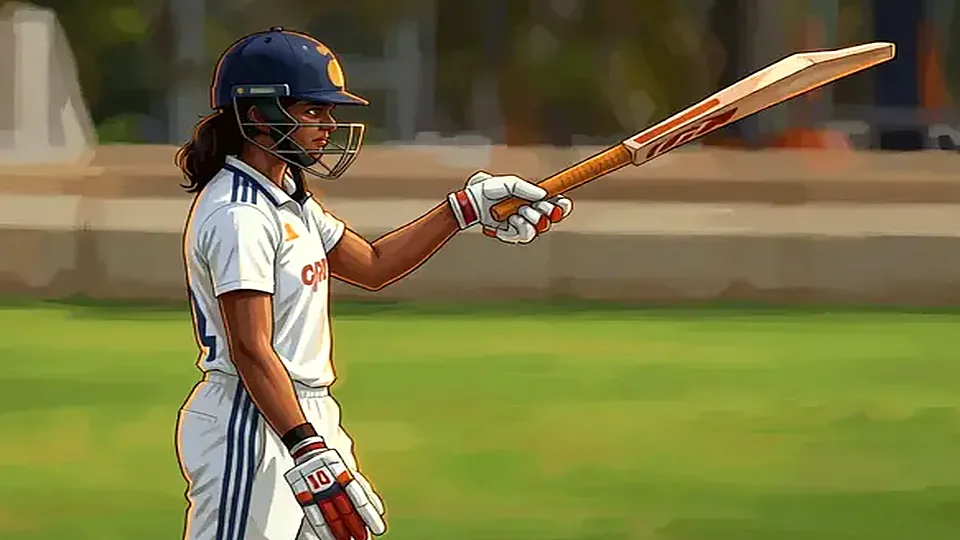
Published 2026-11-12 · By Ritika Malhotra (National Series Correspondent · Chennai Desk)
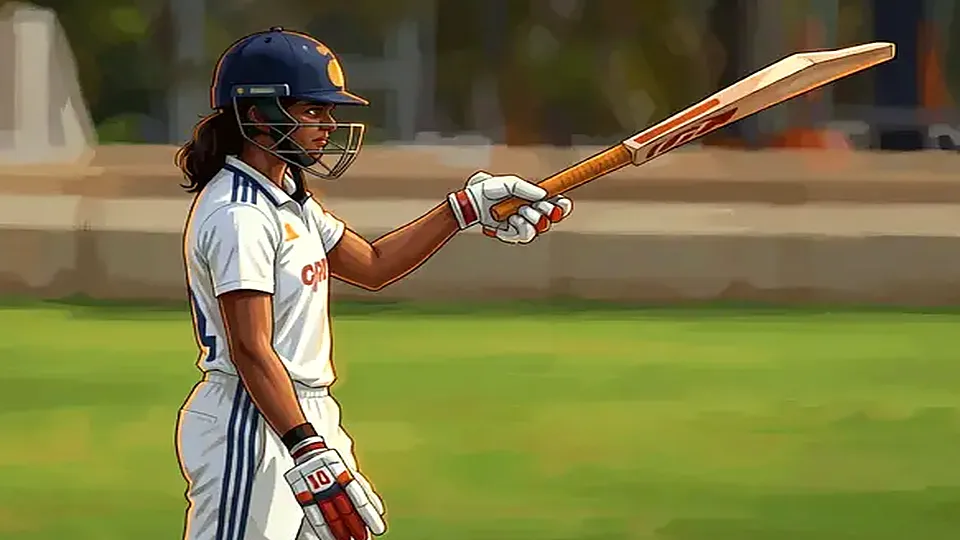
It was 8:45 PM in Chennai when the nets at the M.A. Chidambaram stadium turned slick. The humidity off the bay had crept up, making the red-soil track treacherous for any bat that wasn't rooted in the middle. I watched a young off-spinner from the state team struggle to grip the ball, her wrists trembling. This is the raw, unfiltered reality of the Ranji grind that separates the dreamers from the professionals. And this is exactly the gap Harmanpreet Kaur wants to close.
The WPL as a Pressure Cooker
Harmanpreet’s recent comments via Cricinfo were not just motivational fluff. They were a tactical directive. She told domestic players that the Women's Premier League is the only arena where the standard of play matches the T20 World Cup. The boundary-percentage in T20 cricket demands precision. You can't just slog a single into the stands; you need to build. The WPL enforces this. It forces batsmen to rotate before they accelerate. It forces bowlers to vary length under a shorter run-up.
"If you can survive the intensity of a WPL match, you are ready for the World Cup. There is no other exam in Indian cricket that tests your heart rate like that," Harmanpreet said, her voice steady despite the crowd noise.
For the associations in the South—Tamil Nadu, Karnataka, Andhra—it is a wake-up call. We have talent, yes. But we lack the high-pressure circuitry. How many of our stars can bowl into the pitch on a skiddy hard surface at noon in Delhi? Fewer than we like. The WPL franchise structures, with their data-driven backrooms, are building that muscle memory. They are teaching players to trust their instinct when the scoreboard is against them.
Ignoring the Noise of Numbers
There is a strange phenomenon in the Indian cricket ecosystem today. As I filed this report, a colleague was refreshing a Disawar Satta Jodi Chart online, convinced that numerical patterns in the lottery market correlate with cricket scores. It is a distraction, certainly. But it highlights a deeper issue: the public’s obsession with predicting outcomes rather than understanding the process. Harmanpreet’s advice is about process. It is about the hours spent in the nets, the video analysis of footwork, and the mental resilience to handle a dew factor after 8:30 PM IST.
- State associations must fund travel to WPL matches for trial players.
- Coaching staff need to replicate WPL bowing actions in domestic nets.
- Players must track their strike rate in pressure overs, not just total runs.
The T20 World Cup is a global stage. The WPL is the local qualifier. India’s strength has always been its depth, but depth without polish is just noise. We saw this in the recent bilateral series where the middle order collapsed. Not because of skill, but because of unfamiliarity with the chaos of international T20 cricket. The WPL offers that chaos in a controlled environment. It is safer to fail there than to fail in the final.
The Selection Dilemma
The BCCI selection committee will look at these numbers. They will ask: Who has played 20 WPL matches? Who has a career strike rate above 130 in high-pressure situations? The answer is changing. Players who previously relied on Ranji titles are now competing with franchise stars. This is a good thing. It raises the baseline. The sticky red-soil track of the domestic season no longer provides a comfortable hiding place for lazy technique. You must be able to play on grass, on concrete, on the fast bouncers of Lucknow, and the slow bouncers of Chennai.
As I packed my kit out of the Chennai ground, the air was still thick. The young spinner had left. She had one more season in the Ranji league. But the clock is ticking. The WPL is not just a league; it is a proving ground. If she wants that red jersey, she must take the gamble. She must join the fray. The Disawar Satta Jodi Chart may offer false hope, but the WPL offers a real path. It is the bridge between the village and the world. And for the Indian dream, that bridge is now mandatory.
Related coverage
- IPL’s January Pitch Push Echoes Disawar Satta Jodi Chart Trends
- Hussey’s Return Sparks Impact‑Player Talk, Disawar Satta Jodi Chart & IPL Auction Whirlwinds

Updated 2026-11-12 · Instant Rupee Deposits & 60s Withdrawals · 24/7 Support.
Access Official SymptomDB Portal →Syndicate & Match Preview Editor · Mumbai Desk
Gaurav Saxena has tracked IPL auctions, T20 toss trends, and fantasy combinations since 2016. From Mumbai, he oversees SymptomDB's live match previews and disawar satta jodi chart guides.
Reader Discussion & Match Reactions (2)4.8★ Community (2 Comments)
Verified Indian cricket reader perspectives & tactical debate on symptomdb.com
Harmanpreet’s claim that the WPL mirrors World Cup pressure pushes fantasy owners to target players who can rotate the strike and finish innings, especially all‑rounders like Kaur herself. The article’s mention of a young off‑spinner struggling on the slick Chennai red‑soil and the Tamil Nadu pacer coping with Delhi’s skiddy surface suggests they’ll see a boost in minutes and ownership when the WPL fixtures move to those conditions.
The 8:45 PM Chennai net session described by Ritika, with humidity making the red‑soil track slick, underlines why bowlers will need to shorten their run‑ups and vary length, especially the young off‑spinner whose trembling wrists betray a lack of grip. If the toss favors the side bowling first on Delhi’s noon ‘skiddy’ pitch, field placements must tighten the mid‑wicket corridor to curb boundary‑percentage, while a fourth‑bowler with a flatter trajectory can exploit the moisture left by the earlier humidity surge.